LIVING WITH SICKLE CELL ANEMIA
With good health care, many people who have sickle cell anemia can live productive lives. They also can have reasonably good health much of the time and live longer today than in the past. Many people who have sickle cell anemia now live into their forties or fifties, or longer.
If you have sickle cell anemia, it's important to:
- Adopt or maintain a healthy lifestyle
- Take steps to prevent and control complications
- Learn ways to cope with pain
If you have a child or teen that has sickle cell anemia, you can take steps to learn about the disease and help your child manage it.
Ø Regular Health Care for Children
Children who have sickle cell anemia need routine health care (just like children who don't have the disease). They need to have their growth checked regularly. They also need to get the routine shots that all children get.
All children younger than 2 years old should see their doctors often. Children who have sickle cell anemia may need even more checkups. After age 2, children who have sickle cell anemia may not need to see their doctors as often, but they usually still need checkups at least every 6 months.
These visits are a time for parents to talk with their child's doctor and ask questions about the child's care. Talk with your child's doctor about eye checkups and whether your child needs an ultrasound scan of the brain.
Until age 5, daily penicillin is given to most children who have sickle cell anemia. Doctors also give many children a vitamin called folic acid (foliate) to help boost red blood cell production.
Young children who have sickle cell anemia should have regular checkups with a hematologist (a blood specialist).
Ø Adopt or Maintain a Healthy Lifestyle
To take care of your health, you should adopt or maintain healthy lifestyle habits.
Follow a healthy diet. A healthy diet includes a variety of vegetables and fruits. It also includes whole grains, fat-free or low-fat dairy products, and protein foods, such as lean meats, eggs, seafood, nuts, seeds, beans, and peas.
A healthy diet is low in sodium (salt), added sugars, solid fats, and refined grains. Solid fats are saturated fat and trans fatty acids. Refined grains come from processing whole grains, which results in a loss of nutrients (such as dietary fiber). Examples of refined grains include white rice and white bread.
Your doctor may suggest that you take folic acid (a vitamin) every day to help your body make new red blood cells. He or she also may recommend that you drink at least 8 glasses of water every day, especially in warm weather. This will help prevent dehydration, a condition in which your body doesn't have enough fluids.
Your body needs regular physical activity to stay healthy. However, you should avoid activity that makes you very tired. Drink lots of fluids when you exercise. Talk with your doctor about how much and what kinds of physical activity are safe for you.
You also should get enough sleep and rest. Tell your doctor if you think you may have a sleep problem, such as snoring or sleep apnea. Sleep apnea is a common disorder in which you have one or more pauses in breathing or shallow breaths while you sleep.
Don’t drink or Smoke.
- Take Steps To Prevent and Control Complications
Along with adopting healthy lifestyle habits, you can take other steps to prevent and control painful sickle cell crises. Many factors can cause sickle cell crises. Knowing how to avoid or control these factors can help you manage your pain.
You may want to avoid decongestants, such as pseudoephedrine. These medicines can tighten blood vessels, making it harder for red blood cells to move smoothly through the vessels.
Avoid extremes of heat and cold. Wear warm clothes outside in cold weather and inside of air-conditioned rooms. Don't swim in cold water. Also, be cautious at high altitudes; you may need extra oxygen.
If possible, avoid jobs that require a lot of heavy physical labor, expose you to extremes of heat or cold, or involve long work hours.
Don't travel in airplanes in which the cabins aren't pressurized (that is, no extra oxygen is pumped into the cabin). If you must travel in such an airplane, talk with your doctor about how to protect yourself.
- Ongoing Care
Get a flu shot and other vaccines to prevent infections. You also should see your dentist regularly to prevent infections and loss of teeth. Contact your doctor right away if you have any signs of an infection, such as a fever or trouble breathing.
For people who have sickle cell anemia, just like for everyone else, regular medical care and treatment for health issues are important. Your checkups may include extra tests for possible kidney, lung, and liver diseases. See a sickle cell anemia expert regularly. Also, see an eye doctor regularly to check for damage to your eyes.
Learn the signs and symptoms of a stroke. They include:
- Sudden weakness
- Paralysis (an inability to move) or numbness of the face, arms, or legs, especially on one side of the body
- Confusion
- Trouble speaking or understanding speech
- Trouble seeing in one or both eyes
- Problems breathing
- Dizziness, trouble walking, loss of balance or coordination, and unexplained falls
- Loss of consciousness
- Sudden and severe headache
If you think you’re having a stroke, call an ambulance so that medical personnel can begin life-saving treatment on the way to the emergency room. Do not drive to the hospital or let someone else drive you.
Get treatment and control any other medical conditions you have, such as diabetes.
- Learn Ways To Cope With Pain
Pain is different for each person. Pain that one person can live with is too much for another person. Work with your doctor to find ways to manage your pain.
You may need both over-the-counter and prescription medicines. Your doctor may prescribe strong pain medicines. If so, talk with him or her about how to safely use these medicines.
Other ways to manage pain include using a heating pad, taking a hot bath, resting, or getting a massage. Physical therapy might help ease your pain by helping you relax and strengthening your muscles and joints.
Counseling or self-hypnosis also may help. You may find that activities that keep your mind off the pain, such as watching TV and talking on the phone, are helpful.
- Caring for a Child Who Has Sickle Cell Anemia
If your child has sickle cell anemia, learn as much about the disease as possible. This will help you recognize early signs of problems, such as fever or chest pain, and seek early treatment.
Sickle cell centers and clinics can give you information and counseling to help you handle the stress of coping with your child's disease.
Prevention- Better than Cure
Prevention implies 'to stop doing something'. Cure means 'to find a solution'. Man is prone to commit mistakes. Prevention is the shield which saves mankind from many disasters, chaos and destruction. Man can foresee the happenings of the future. He checks himself from doing anything wrong.
We must measure very step we take. Cure involves much more effort and pain than what would need to prevent a problem from affecting us. A cure is a blessing, but prevention is more than a blessing. It is better than cure. A wise act of cautious mind can check us from stepping into something wrong or dangerous. The act of right living makes everything possible. Living in the right sense means living judiciously, wisely and cautiously.
The same is true for Sickle Cell Anemia. However it cannot be totally prevented because it is a genetic disease. If a person is born with it, steps should be taken to reduce complications.
- Facts on Anemia
Anemia is a major killer in India. Statistics reveal that every second Indian woman is anemic and one in every five maternal deaths is directly due to anemia. Anemia spares none; it affects both adults and children of both sexes, although pregnant women and adolescent girls are most susceptible and most affected by this disease. The results on the prevalence and deaths due to anemia are still staggeringly high despite the government having initiated many health programs and allocated large amounts of finances over the last three decades (Exhibits 1 & 2 for the details) to combat this disease. In summary, the current situation is:
- One in every two Indian women (56%) suffers from some form of anemia
- 4 out of every 5 children in the age of 6-35 months suffer from anemia
- 20% of the maternal deaths are due to anemia and anemia indirectly contributes to another 40% of maternal deaths
- Maternal mortality staggeringly high at 454 per every 100,000 live births
- Results not commensurate with the 30 years of efforts by the Indian government
- Approximately 5% of the world’s population carries trait genes for hemoglobin disorders, mainly, sickle-cell disease and thalassemia.
- Hemoglobin disorders are genetic blood diseases due to inheritance of mutant hemoglobin genes from both, generally healthy, parents.
- Over 300 000 babies with severe hemoglobin disorders are born each year.
- The health burden of hemoglobin disorders can be effectively reduced through management and prevention programs.
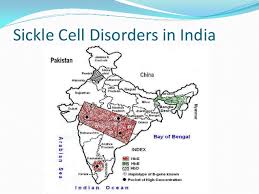
People who are at high risk of having a child with sickle cell anemia and are planning to have children may want to consider genetic counseling. A counselor can explain the risk (likelihood) of having a child who has the disease. He or she also can help explain the choices that are available.
You can find information about genetic counseling from health departments, neighborhood health centers, medical centers, and clinics that care for people who have sickle cell anemia.
Talk with your doctor if you're pregnant or planning to become pregnant. Sickle cell anemia can worsen during pregnancy. You'll need special prenatal care.
Women who have sickle cell anemia also are at increased risk for an early birth or a low-birth-weight baby. However, with early prenatal care and frequent checkups, you can have a healthy pregnancy.
A small test can prevent you from dozens of problems. Matching health cards is as necessary as matching Horoscopes!
BLOOD DONATION: THE MOST VALUED SERVICE TO MANKIND
MILLIONS OF people owe their lives to people whom they will never know or meet in their lifetime. They are none other than those people, who have donated their blood freely and without any reward – voluntary blood donors. Voluntary unpaid donors are the foundation of a safe blood supply which saves millions of human beings from the jaws of untimely death. We need to extend a hearty appreciation to these unsung heroes who give the precious gift of life to mankind.
Nothing is comparable to the preciousness of human blood. In spite of the rapid and remarkable conquests of medical science today, there is no laboratory that manufactures blood. It is only in human beings that human blood is made and circulated. For those who require blood for saving their lives, sharing from other fellows is the only means. Hence, donation rather voluntary donation is the only way of accumulating blood at safe storage to meet emergency requirements for saving lives.
- Facts about blood needs
- Every year our nation requires about 4 Crore units of blood, out of which only a meager 40 Lakh units of blood are available.
- The gift of blood is the gift of life. There is no substitute for human blood.
- Every two seconds someone needs blood.
- More than 38,000 blood donations are needed every day.
- A total of 30 million blood components are transfused each year.
- The average red blood cell transfusion is approximately 3 pints.
- The blood type most often requested by hospitals is Type O.
- Sickle cell patients can require frequent blood transfusions throughout their lives.
- More than 1 million new people are diagnosed with cancer each year. Many of them will need blood, sometimes daily, during their chemotherapy treatment.
A single car accident victim can require as many as 100 units of blood.
- Who benefits from your blood donations?
- Accident and burns victims – A single car accident victim can require as many as 100 units of blood.
- Cancer patients – It is estimated that more than 1 million people are diagnosed with cancer every year; most cancer patients will require blood, sometimes daily, or during their chemotherapy treatment.
- For those undergoing surgery
- People with bleeding disorders like hemophilia
- People with immune system disorders
- People with sickle cell anaemia
Blood is required for treatment of accidental injuries, burns, diseases like Hemorrhagic, Anemia, Leukemia, Thalassemia and Hemolytic ailments. In times of accidental injuries that shed huge amounts of blood and also in various types of surgical operations for medical treatments, we require blood for transfusion. Unavailability of blood may cost lives.
Hence, importance of blood donation is tremendous. This is the greatest gift one can give to the fellow humans. Voluntary blood donors are saviors of mankind. If someone really loves oneself and other fellow beings, the only way to express it is to donate blood voluntarily.
“The gift of blood is the gift of life. There is no substitute for human blood. Blood cannot be manufactured – it can only come from generous donors.”
